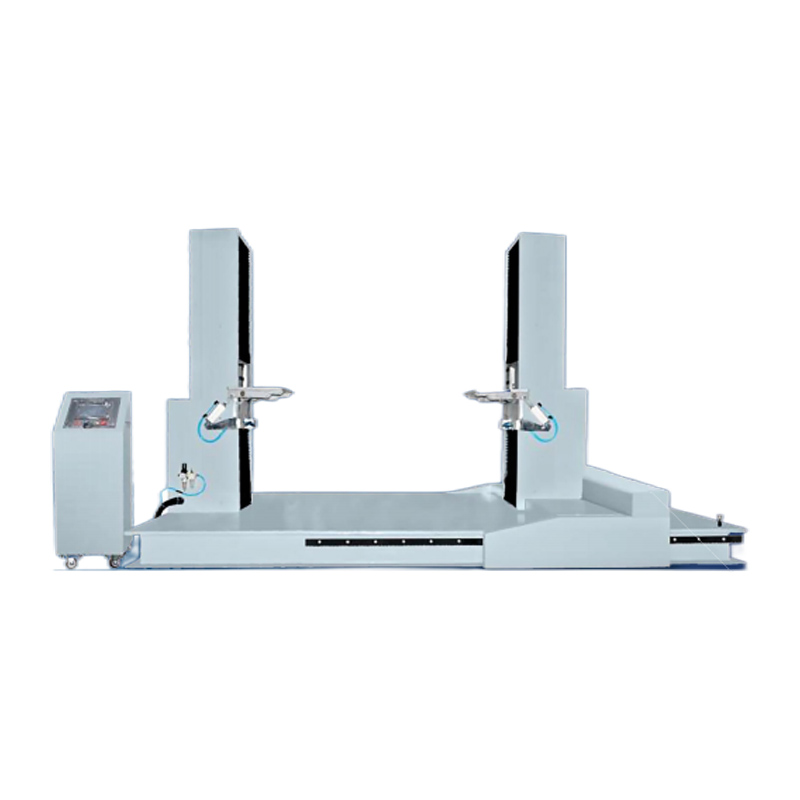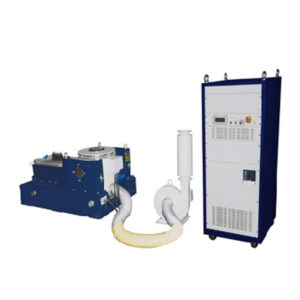
The Battery Pack Drop Test Machine is designed to simulate the impact and shock that battery packs may experience during transportation, handling, and real-world conditions. The Battery Pack Drop Test Machine evaluates the structural integrity and safety performance of EV lithium-ion battery packs.
Product Application
Used to simulate and study the impact experienced by battery packs during transportation and handling, in order to evaluate their impact resistance and overall safety performance.
Equipment Composition
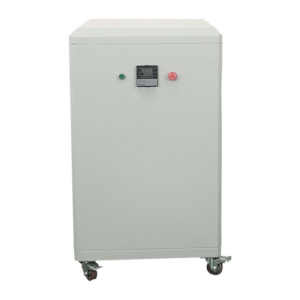
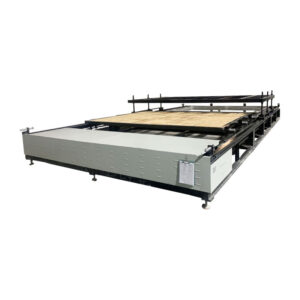
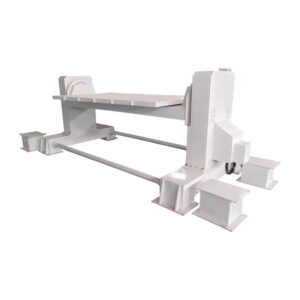
This Battery Pack Drop Test Machine is composed of a base frame, fixed drop module, movable drop module, lifting system, drop system, reset system, control system, and safety protection system.
Technical Specifications
| Product Name | Battery Pack Drop Test Machine |
| Drop Height | 500–1500 mm (customizable) |
| Test Space (W×D×H) | 3000 × 2000 × 1000 mm (customizable) |
| Maximum Load | 1000 kg (customizable) |
| Overall Dimensions (W×D×H) | 4500 × 2500 × 2300 mm |
| Machine Weight | Approx. 4500 kg |
| Required Air Pressure | ≥ 0.6 MPa |
| Control Method | Computer remote control with video monitoring, or PLC touchscreen control (customizable) |
| Drop Directions | Face, Edge, and Corner |
| Drop Floor | Channel steel + concrete (concrete thickness 200 mm) |
| Displacement Accuracy | ±5 mm |
| Height Control | Motor-driven screw height adjustment |
| Height Measurement | Rotary encoder |
| Drop Control | Pneumatic control |
| Accelerated Release Control | Pneumatic accelerated opening and release system |
| Synchronized Short-Circuit Control | Inverter + rotary encoder synchronized drop control |
| Remote Video Monitoring | Monitoring cameras installed (resolution ≥ 5 megapixels, 1080P) |
Installation Requirements
- Floor load capacity ≥ 1500 kg/m²; drainage trench around the equipment (300 × 300 mm).
- Laboratory space ≥ W6000 × D6000 × H5000 mm.
- Lighting system installed inside the lab, illumination ≥ 200 lumens.
- Equipped with fire-fighting water or tap water for battery pack fire suppression.
- Install an exhaust hood connected to a smoke purification system above the test area; height ≥ 4.5 m from the ground, not interfering with overhead cranes; smoke exhaust volume ≥ 90 times the laboratory volume per hour.
- Explosion-relief vent and air compensation inlet designed inside the laboratory.
- For installing a cantilever crane, a pit of W1500 * D1500 * H1500 mm must be excavated, with an embedded anchor cage and concrete reinforcement.